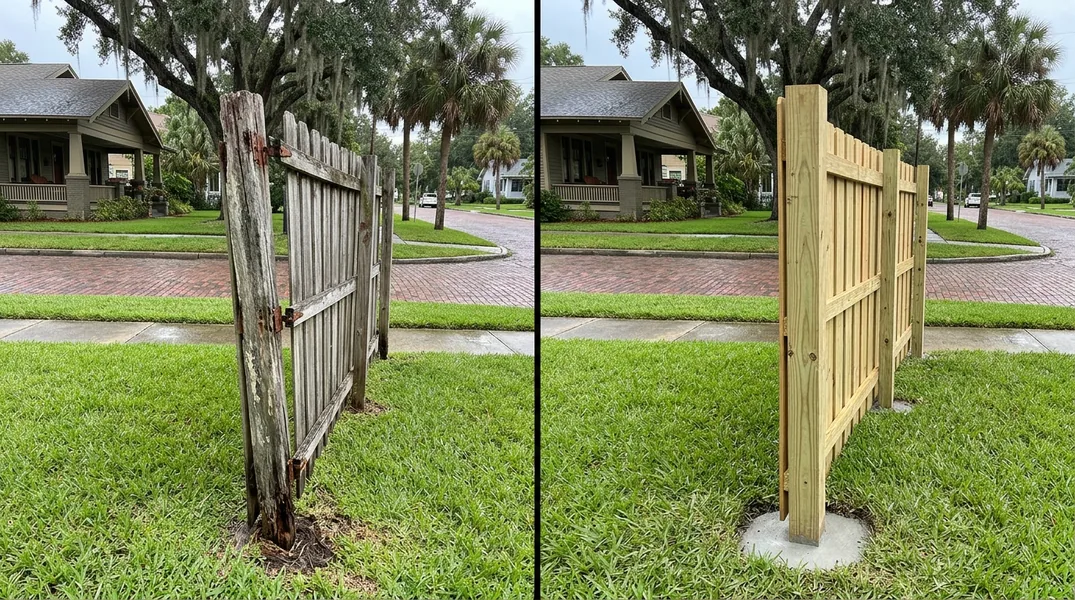
The Perfect Storm: Sandy Soil, Salt Air, and Leaning Fences
If you own a home in St. Petersburg, you've probably noticed that fences here face challenges you wouldn't see in other parts of Florida or the country. The combination of sandy soil, coastal salt air, and intense sun creates an environment that's particularly tough on fence structures. Unlike areas with clay or loamy soil that holds moisture evenly, the sandy terrain around St. Petersburg drains water rapidly, leaving fence posts sitting in unstable ground that shifts with rainfall, drought, and foot traffic.
The real culprit behind most leaning fences in our area, however, is the salt air. Living just minutes from the Gulf of Mexico means your fence is constantly exposed to salt spray and moisture that accelerates rust and wood decay. Even treated wood can succumb to these conditions over time, and metal fasteners corrode at an alarming rate. When you combine unstable sandy soil with corroded posts and weakened wood fibers, the result is a fence that gradually tilts, leans, or becomes dangerously unstable. This isn't a cosmetic issue either. A leaning fence can eventually collapse, creating liability and safety concerns for your family and neighbors.
Understanding Corroded Fence Posts and Why They Fail
The Wood & Privacy Fence Installation industry has long recognized that fence post failure is the leading cause of structural problems. In St. Petersburg, this issue is magnified because salt air doesn't just affect the wood itself. The metal brackets, bolts, and hardware that hold your fence together corrode from the inside out. You might not see the damage at first, but beneath the surface, rust is eating away at the structural integrity of your fence system.
When a corroded fence post begins to fail, the damage typically starts at the base where the post meets the concrete footer. This is where moisture pools and salt deposits accumulate most heavily. The wood becomes soft and spongy, losing its ability to support the weight of the fence panels and rails. Metal posts fare slightly better initially, but they too succumb to rust, becoming thin and brittle. Once a post reaches this point, it can no longer hold the fence upright, and the entire section begins to lean. The problem accelerates because the weight distribution shifts to neighboring posts, which then bear extra load and fail more quickly.
Leaning Fence Repair Near Me: When to Call a Professional
The moment you notice your fence starting to lean, it's time to act. Many homeowners think they can simply push the fence back upright or add some bracing, but these are temporary fixes that ignore the root cause. A leaning fence is telling you that one or more posts have failed structurally. Without addressing the underlying problem, the fence will continue to deteriorate and may eventually fail completely, potentially injuring someone or damaging property.
Professional leaning fence repair starts with a thorough inspection to identify which posts are compromised. Our team at St. Petersburg Fence Company examines the soil conditions, the extent of wood decay or rust, and the overall stability of the structure. In some cases, we can reinforce existing posts with additional bracing or concrete. In others, fence post replacement is the only safe and lasting solution. We use materials and techniques specifically suited to our coastal climate, ensuring your repaired fence will stand strong for years to come.
Fence Post Replacement: The Long-Term Solution
Fence post replacement involves removing the damaged post and installing a new one using proper techniques that account for our local soil and climate conditions. This isn't a simple dig-and-replace job. The old concrete footer must be removed, the hole must be dug to the proper depth, and the new post must be set in fresh concrete mixed to the right consistency. We use pressure-treated wood or composite materials rated for coastal environments, and we ensure all hardware is stainless steel or otherwise corrosion-resistant.
The process begins with disconnecting the fence panels and rails from the damaged post. Once the post is removed, we inspect the surrounding posts to determine if they're also showing signs of failure. In many cases, replacing one post reveals that neighboring posts are beginning to fail as well. This is why a professional assessment is so valuable. We can recommend whether you need to replace one post, several posts, or potentially the entire fence structure. The investment in proper fence post replacement is far less than the cost of emergency repairs or complete fence replacement later.
Preventing Future Leaning Fences: Maintenance and Material Choices
Prevention is always better than repair. If you're planning new Wood & Privacy Fence Installation, discuss material options with your contractor. While wood offers natural beauty and charm, composite materials and vinyl can provide better longevity in our salty environment. If you prefer the classic look of wood, ensure it's pressure-treated and rated for coastal use. The quality of the concrete footer is equally important. Proper depth, quality concrete mix, and adequate curing time make a huge difference in how long your fence will stand.
Regular maintenance also extends fence life significantly. Inspect your fence twice yearly, looking for signs of leaning, soft spots in the wood, rust on metal components, or loose connections. Rinse your fence with fresh water after heavy salt spray events to remove salt deposits. Keep gutters and drainage clear so water doesn't pool around post bases. Apply sealant to wood fences every two to three years to protect against moisture and salt penetration. These simple steps can add years to your fence's lifespan and help you avoid the expense and hassle of major repairs.
Fence Post Repair Cost in St. Petersburg: What to Budget
The cost of fence post repair varies depending on the extent of damage and the materials needed. A single post replacement typically costs less than replacing multiple posts or an entire fence section. Factors that affect pricing include the type of material (wood, composite, metal), the condition of surrounding posts, soil conditions that may complicate removal, and whether the existing concrete footer needs to be removed and replaced. In St. Petersburg, where soil and climate conditions are particularly challenging, expect to invest more in quality materials and professional installation than you might in other regions.
Rather than guessing at costs, the best approach is to schedule a free estimate with St. Petersburg Fence Company. Our team will assess your specific situation, identify all posts that need attention, and provide transparent pricing for the work. We can often work within your budget by prioritizing the most critical repairs and phasing additional work over time. Call us today at (727) 591-6938 to discuss your leaning fence and get a professional evaluation.
Looking for a professional fence contractor in St. Petersburg? St. Petersburg Fence Company responds fast for all your fence needs.
Get a Free Quote