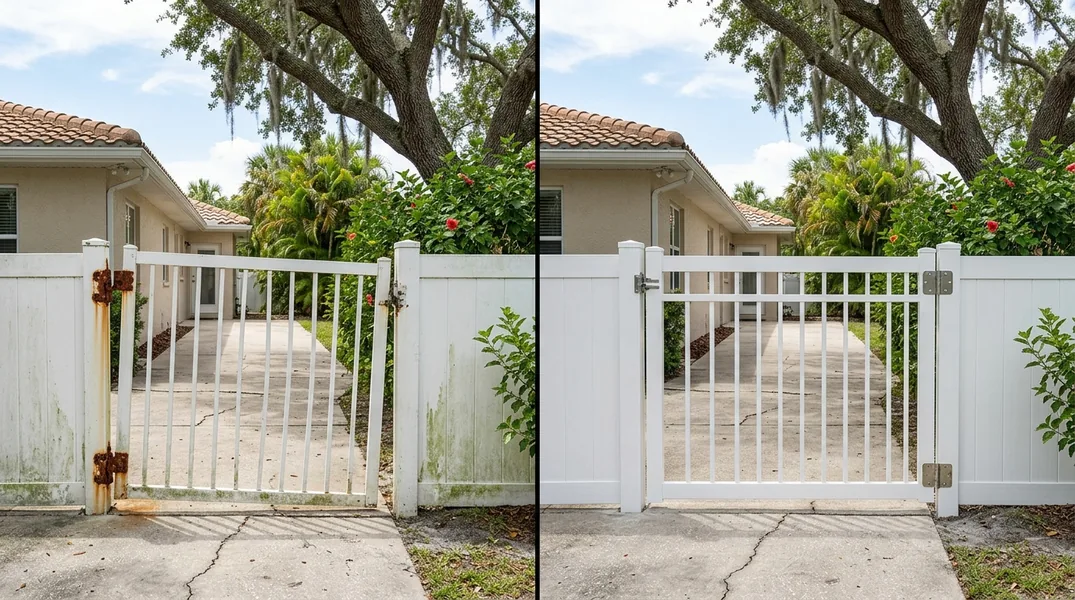
Why Waterfront Properties Need Special Fence Considerations
Living on a waterfront lot in St. Petersburg comes with undeniable beauty, but it also brings unique challenges for homeowners planning a fence installation. The combination of salt spray, high humidity, intense UV exposure, and occasional strong winds creates an environment that can quickly degrade ordinary fencing materials. Unlike inland properties, waterfront homes demand materials and designs engineered to withstand coastal conditions without deteriorating in just a few years.
When you're evaluating vinyl vs aluminum fence options for a waterfront property, you're really asking which material will hold up best against nature's harshest elements while maintaining curb appeal and property value. Both materials have legitimate advantages, but they perform very differently in salt air environments. Understanding these differences is essential before investing thousands of dollars in a fence that will frame your home for the next 15 to 20 years. The right choice depends on your priorities around maintenance, aesthetics, durability, and long-term value.
Vinyl Fencing for Waterfront Homes: Pros and Cons
Vinyl & PVC Fence Installation has become increasingly popular among Florida homeowners, and for good reason. Vinyl is inherently resistant to rust and corrosion, which makes it an attractive option for properties exposed to salt spray and moisture. Unlike wood, vinyl won't rot, splinter, or require regular staining and sealing. It's also low-maintenance, typically needing only occasional washing with a garden hose to keep it looking fresh. For busy homeowners who want a fence that simply performs without constant upkeep, vinyl checks many boxes.
However, vinyl has some legitimate limitations in waterfront environments. While the material itself doesn't corrode, vinyl can become brittle and discolored over time when exposed to prolonged UV radiation and salt air. The sun's intensity in Florida can cause vinyl to fade or develop a chalky appearance, and replacement panels can be expensive if damage occurs. Additionally, vinyl has lower structural rigidity than aluminum, which means it may flex or move more in strong coastal winds, potentially affecting its longevity and appearance. In areas prone to hurricane-force winds, this flexibility can be a significant concern.
Aluminum and Ornamental Iron Fencing: The Waterfront Alternative
Aluminum & Ornamental Iron Fencing offers a different set of advantages for waterfront properties. Aluminum is lightweight, incredibly strong, and naturally resistant to rust and corrosion. Unlike steel, aluminum doesn't require painting or protective coatings to resist salt air, making it an excellent choice for coastal environments. The material maintains its structural integrity even in high winds, and it won't warp, sag, or become brittle over time. For homeowners seeking a fence that combines durability with minimal maintenance, aluminum delivers on both fronts.
The aesthetic appeal of aluminum fencing is another major advantage. Aluminum fences can be designed with elegant ornamental details that enhance a property's appearance and increase curb appeal. They're available in various styles, from contemporary horizontal slat designs to classic picket patterns, giving you flexibility to match your home's architectural style. The material also allows for wind through fence design, which is particularly important for waterfront properties. A fence with openings or a lattice pattern permits air and water to flow through during storms, reducing wind load and structural stress on the fence posts. This design feature can significantly extend the life of your fence in hurricane-prone areas like St. Petersburg.
Wind Through Fence Design: A Critical Feature for Coastal Properties
If you're installing a fence on a waterfront lot, understanding wind through fence design is essential. A solid, impenetrable fence acts like a sail during high winds, catching air and creating enormous pressure on fence posts and the entire structure. This pressure can lead to leaning posts, cracked panels, or complete failure during storms. In contrast, a fence designed with openings, pickets, or a lattice pattern allows wind to pass through rather than pushing against it. This reduces the load on the structure and significantly improves its ability to withstand coastal weather.
Aluminum fencing naturally lends itself to wind through fence design because of its strength and design flexibility. You can incorporate horizontal slats with small gaps, ornamental spacing, or even decorative lattice panels that maintain privacy while allowing air circulation. Vinyl fencing, while available in various styles, is more challenging to design with adequate wind passage without compromising privacy. The material's lower structural rigidity means that even with openings, it may flex excessively under pressure. If you're serious about maximizing your fence's longevity in a waterfront environment, prioritizing wind through fence design should be a top consideration in your material selection.
Best Fence Material Florida: Comparing Performance and Longevity
When researching the best fence material Florida has to offer for waterfront properties, the data consistently points to aluminum as the superior choice for coastal environments. Aluminum outperforms vinyl in salt spray resistance, structural strength, wind tolerance, and long-term durability. Studies of Florida coastal properties show that well-maintained aluminum fences regularly last 20 to 30 years or more, while vinyl fences in similar environments often show significant degradation within 10 to 15 years. The difference in real-world performance is substantial and directly impacts your return on investment.
That said, vinyl remains a valid option if your budget is limited or if your waterfront property has less direct salt spray exposure (for example, if you're on a bay rather than ocean-facing). Vinyl typically costs less upfront than aluminum, and if you're willing to replace panels periodically or accept some aesthetic changes over time, it can still provide functional privacy and boundary definition. However, if you're looking for a fence that will maintain its appearance and structural integrity with minimal intervention for decades, aluminum is the best fence material Florida homeowners can choose for waterfront applications.
Cost Comparison and Long-Term Value for Waterfront Fencing
When comparing vinyl vs aluminum fence options, initial pricing is often the first consideration. Vinyl fencing typically costs 15 to 25 percent less than aluminum fencing upfront, which can be a significant savings on a large waterfront property. However, this initial savings can be misleading when you factor in long-term costs. Vinyl panels that fade, crack, or become brittle will need replacement, and finding matching replacement sections years later can be frustrating and expensive. Aluminum, while more expensive initially, rarely requires replacement or major repairs if properly installed.
The true cost of ownership for a waterfront fence includes maintenance, repairs, and eventual replacement. Aluminum fencing costs more initially but requires virtually no maintenance beyond occasional cleaning and perhaps a touch-up of any protective coating every 5 to 10 years. Vinyl fencing, while requiring less active maintenance than wood, may need panel replacement, and the cumulative cost of repairs can eventually exceed the initial savings. For waterfront properties in St. Petersburg where coastal conditions are harsh, aluminum typically delivers better long-term value. If you'd like a detailed cost analysis tailored to your specific property and preferences, the team at St. Petersburg Fence Company can provide a free estimate that breaks down both materials and their long-term implications.
Making Your Decision: Questions to Ask Before Installation
Before committing to either vinyl or aluminum, ask yourself several important questions about your waterfront property and your priorities. How much direct salt spray exposure does your lot receive? Are you willing to perform maintenance, or do you prefer a completely hands-off solution? What's your timeline, and are you planning to stay in the home long-term? Do you prioritize aesthetics, functionality, or a balance of both? Are you concerned about wind resistance and storm preparedness? Your answers to these questions will guide you toward the material that best fits your situation.
If you're still uncertain which material is right for your waterfront property, professional guidance can be invaluable. The experienced team at St. Petersburg Fence Company has installed hundreds of fences on waterfront lots throughout the region and understands the specific challenges coastal properties face. They can assess your property, discuss your goals, and recommend the best fence material Florida has to offer based on your unique circumstances. Call (727) 591-6938 today or visit our website to request a free estimate and get expert advice tailored to your waterfront home.
Looking for a professional fence contractor in St. Petersburg? St. Petersburg Fence Company responds fast for all your fence needs.
Get a Free Quote